

Think of France, and Champagne probably pops into your head. But wait — there’s a whole world of bubbles hiding just beyond the iconic label. These sparkling wines from France range from crisp, floral Chenin Blancs in Vouvray to strawberry-sweet Crémant d’Alsace Rosé. Some follow centuries-old traditions, others feel delightfully modern—but all of them bring tiny bubbles that make life feel just a little brighter.
Beyond Champagne: The 23 Sparkling Wines of France
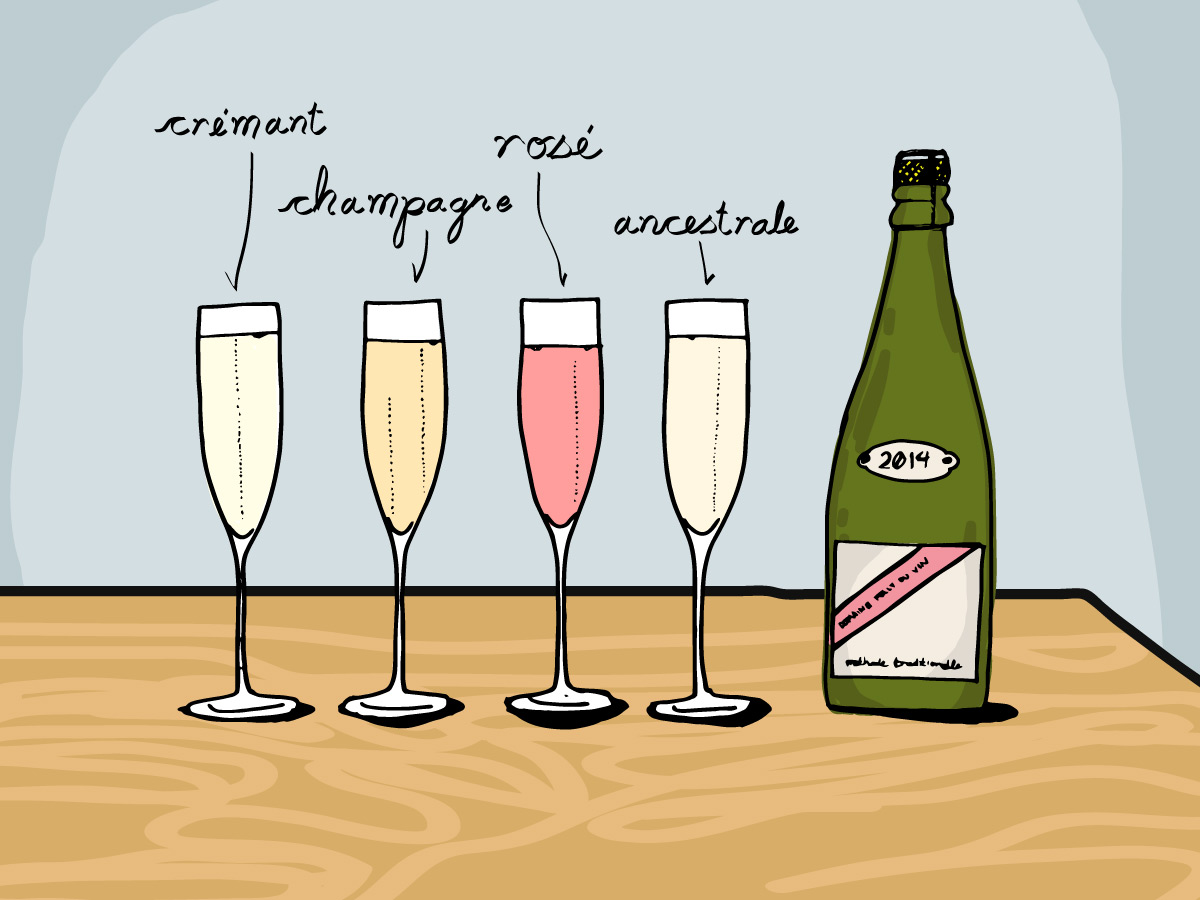
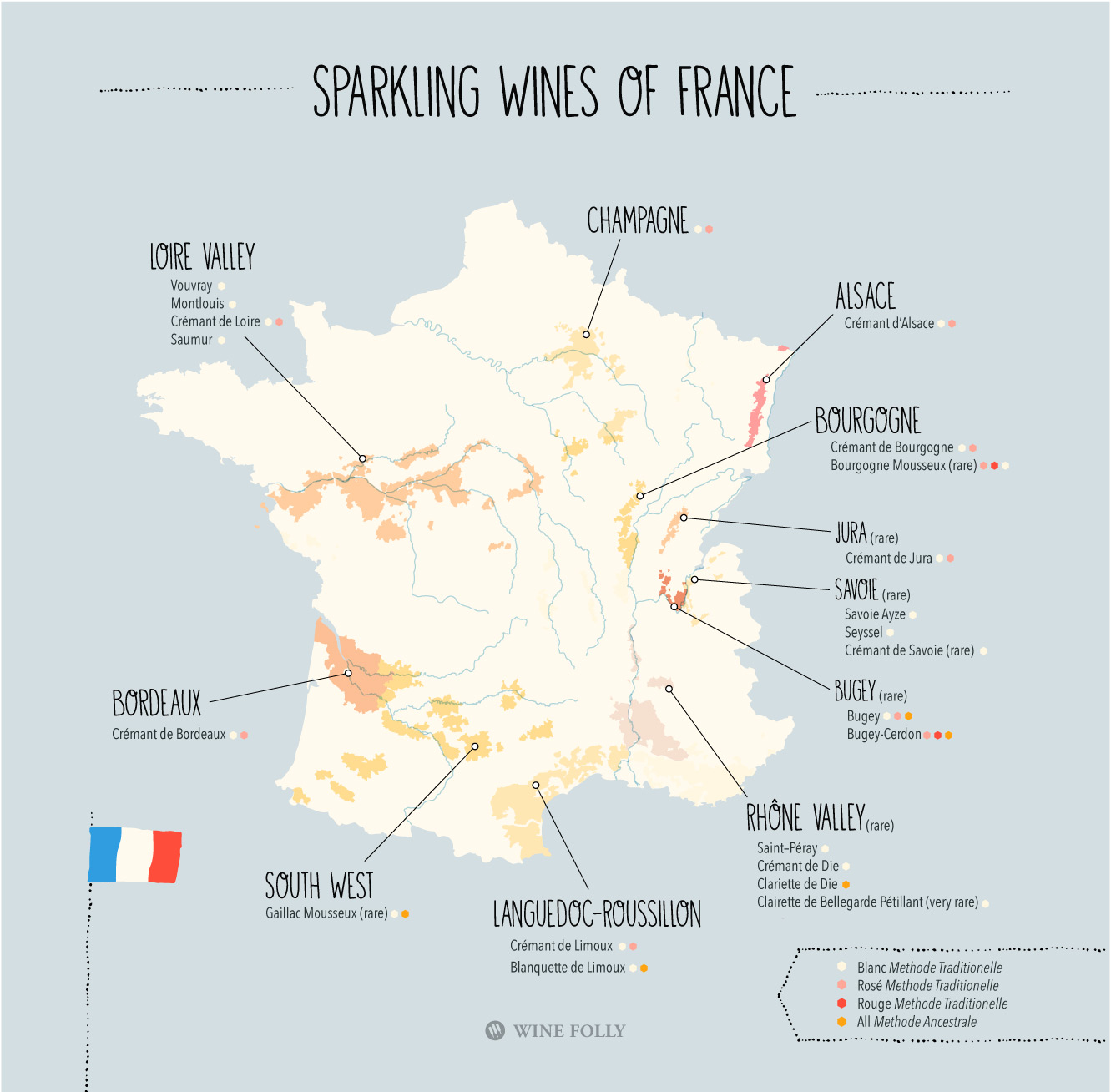
A great bottle of bubbly makes life feel just a bit more amazing. It happens when those tiny bubbles hit your tongue. In that moment, you realize all the little things that bother you don’t matter. You find yourself relaxing and appreciating everything just a little bit more. As it happens, there are 23 French bubbly regions, including Champagne. It has been recently noted that Limoux in the Languedoc-Roussillon may, in fact, be truly the first French bubbly region.
Sparkling Wines of France Map
The Styles of French Sparkling Wine
There are two primary methods used for making sparkling wine in France: Méthode Traditionnelle and Méthode Ancestrale.

Méthode Traditionnelle
This is the method that Champagne uses to make sparkling wine. This bubbly-making technique is also employed in all the Crémant regions, “Mousseux” appellations in the Loire, and a few others such as Bugey and Seyssel. If the bottle says ‘Brut’ it’s referring to the sweetness level, not the production method. To spot Méthode Traditionnelle, look for phrases like ‘Méthode Traditionnelle’ or ‘Méthode Champenoise’ (outside Champagne) on the label. You will find a few select producers who make really solid wines, perfect for midweek sipping and usually lasting up to 2 nights.
Methode Ancestrale
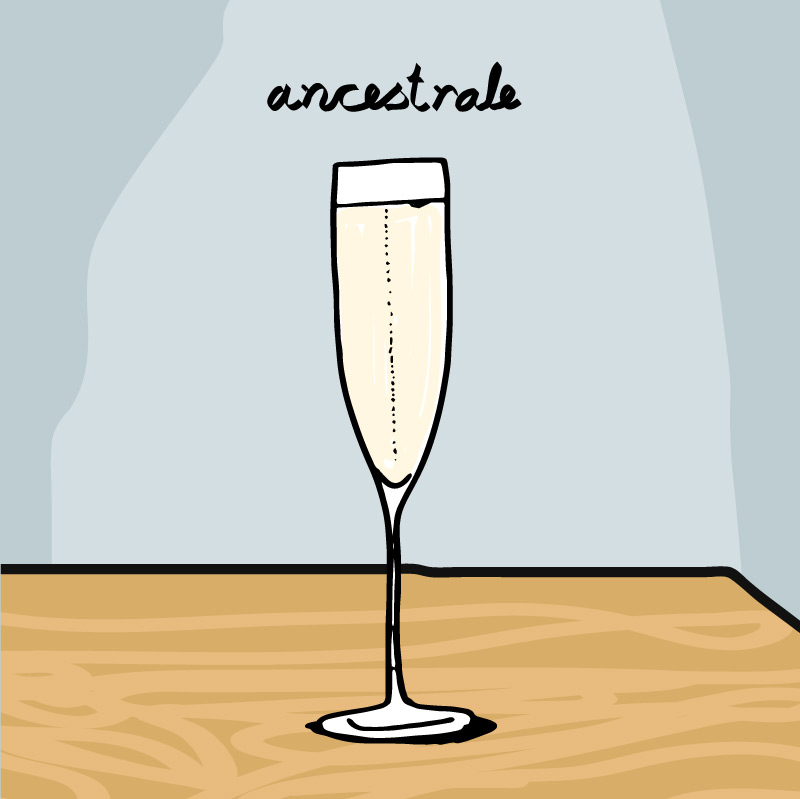
A method used during the era of King Henry VIII, Michelangelo, and Copernicus. You’ll note that it seems very similar to how craft cider or ale is made. After the wine fermentation begins and before the yeast finishes fermenting the sugar into alcohol, the wine is bottled. The pressure made from the remaining fermentation carbonates the wine. So the winemaker has to time it, juuust right. Then, they’ll usually pop a crown cap or cider-style cork in and wait. You’ll want to pour them slowly and at an angle (like an ale) to separate the clear wine (only if the wine is unfiltered). The wines will have fewer bubbles than traditional Champagne, in a bubble style more similar to beer. Expect a fine, creamy texture, but with much more delicate froth, so the grape flavor comes across more intensely.
We’ve spotted Méthode Ancestrale wines from Gaillac Mousseux, Bugey-Cerdon (a dark, fruity rosé), Montlouis, and Blanquette de Limoux, primarily in hip independent wine shops around the country.
Sparkling Wines from Loire
The majority of Loire sparkling wines are made with Chenin Blanc in the Méthode Traditionnelle style. You’ll find many examples from Vouvray and Montlouis (sounds like “mont-Louie”). These wines will have floral aromas of acacia and carnation and fruit notes of pear and apple. They’re killer with sushi, tempura veggies, or a good fried chicken sandwich — the acidity slices through the fat and the orchard-fruit notes pop. The Crémant de Loire wines can also include a bit of Chardonnay or Cabernet Franc (for the rosé).
Sparkling Wines from Burgundy
Most Crémant de Bourgogne is made in Côte Chalonnaise. These sparkling wines are made from Burgundy’s two main grapes: Pinot Noir and Chardonnay. It’s generally warmer in Bourgogne, so these wines often will have a ‘riper’ flavor than their bone-dry Champagne neighbors. If it says ‘Millésime’, it means it’s a single-vintage wine, which usually has additional lees aging – a technique practiced in Champagne.
Sparkling Wines from Alsace
Alsace makes white Crémant d’Alsace with Pinot Gris, Pinot Blanc, Riesling, Auxerrois, and Chardonnay and rose Crémant d’Alsace with 100% Pinot Noir. Alsace sparkling wine is pretty fruity (think lemons, strawberries, and honeysuckle), which makes it perfect for those who are trying to develop their palate to fine sparkling wine. Try it with Moroccan cuisine.
Sparkling Wines from Limoux, Languedoc-Roussillon
Languedoc-Roussillon hums along undetected, but it’s actually France’s largest wine region and perhaps the oldest. Crémant de Limoux is made from Chardonnay, Mauzac, and Chenin Blanc. The region actually has records of sparkling wine production dating back to 1531, which is a few years older than Champagne. If you want to try a wine made with the Ancestrale method, look for the Blanquette de Limoux from this area (90%+ Mauzac, an indigenous grape).
Explore More
We didn’t mention all the sparkling wine regions, but there are more great ones to discover on your own. All you have to remember is to think about the climate where the wine is made to understand how it will taste.