

Merlot can be a bit of a chameleon, ranging from fruity, smooth, and easygoing to age-worthy, full-bodied, and sophisticated. Often mistaken for its blending partner, Cabernet Sauvignon, Merlot is not one to be underestimated.
Also known as: Bordeleza Belcha, Petit Merle
Table of Contents
Primary Flavors
- Cherry
- Chocolate
- Plum
- Bay Leaf
- Vanilla
Taste Profile
But there’s more to Merlot than being smooth. It’s actually a bit of a chameleon, partly because of how it’s vinified, and mostly because of where it grows.
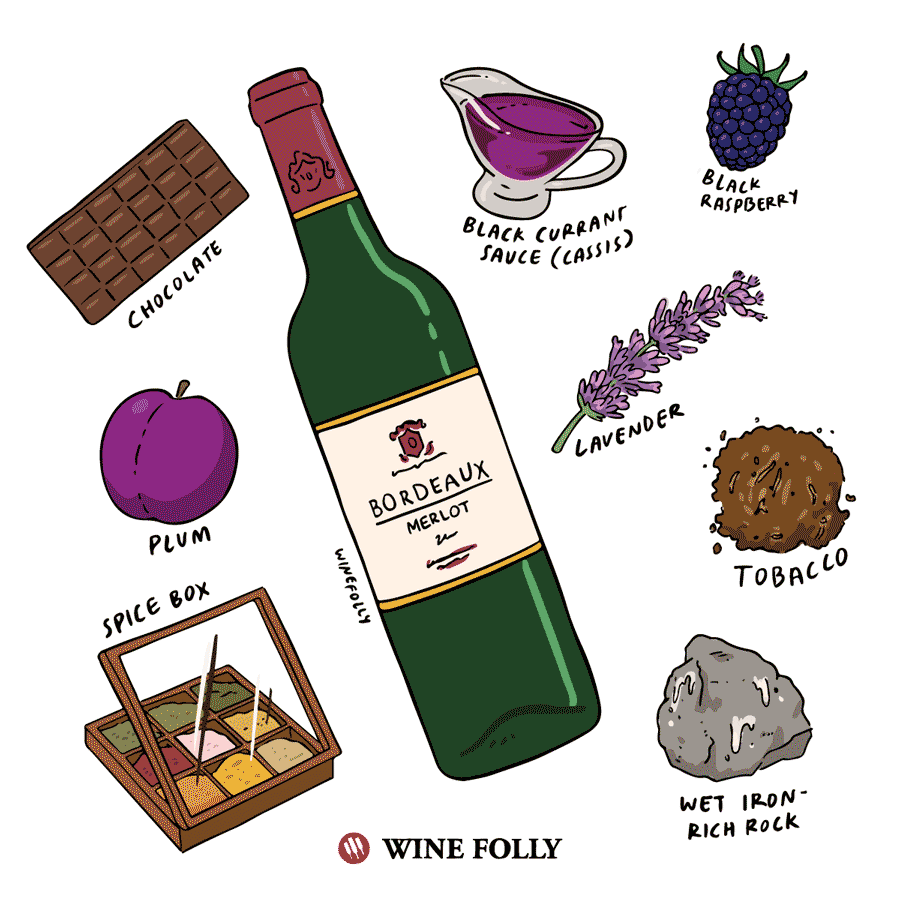
On the nose, Merlot ranges from fresh red plum and cherry in cooler climates to baked blackberry and fruitcake in warmer climates. Merlots aged in oak can develop vanilla and spice aromas. It can also develop earthy, meaty, and chocolate-like aromas, alongside other tertiary characteristics.
On the palate, Merlot is often softer and less astringent than Cabernet Sauvignon. Warmer-climate Merlot often has riper fruit, higher alcohol and a fuller body, while tannin structure varies with growing conditions and winemaking. Merlot also has refreshing acidity, though not overtly high. Think of it as the Smooth Operator of grapes.
How to Serve Merlot Wine
Merlot should be enjoyed slightly below room temperature, ideally 60-68°F (15-20°C). This helps highlight the wine’s aromas while keeping alcohol less prominent.
A large wine glass is suitable for Merlot. Its shape aids aeration, highlighting the wine’s aromas. Decanting for approximately 30 minutes before serving allows for a wine to open up fully.
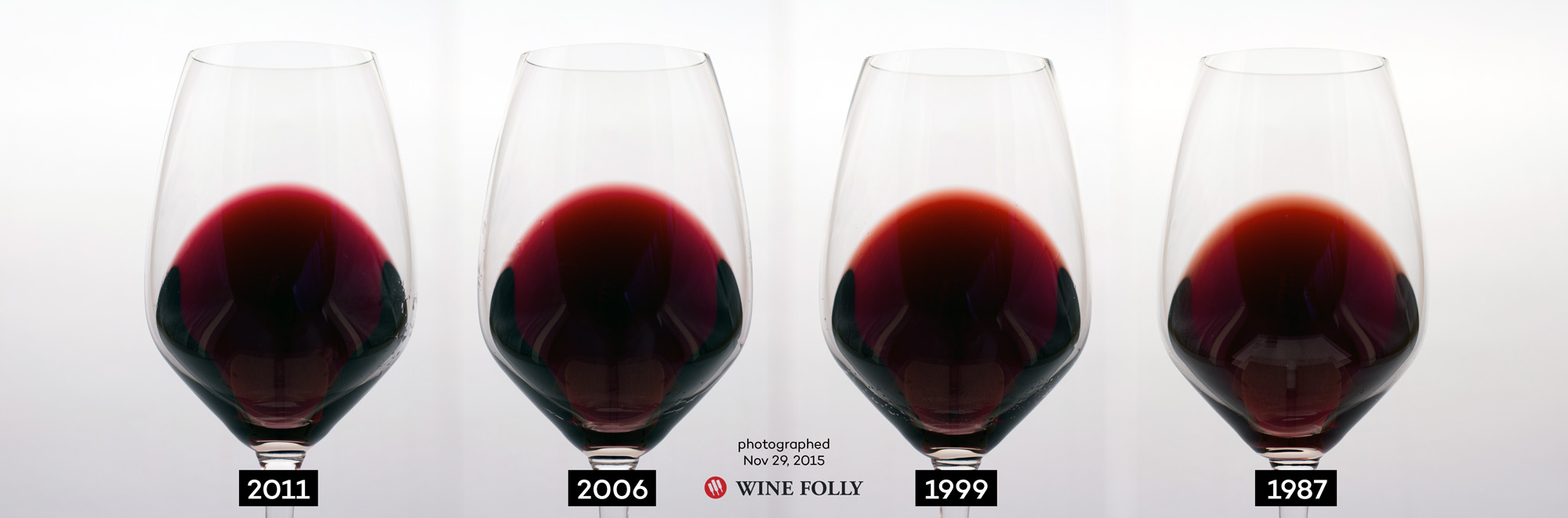
Merlot gains complexity with time, revealing spicy, plummy notes and undertones reminiscent of dark chocolate. Many Merlots will age gracefully for 3-7 years, while exceptional ones can continue to enhance their complexity for 15 years or more.

SERVE
60–68°F / 15-20°C
GLASS TYPE
Oversized
DECANT
30 minutes
CELLAR
10+ Years
Merlot Food Pairing
Merlot pairs well with a wide variety of foods. Don’t be afraid to experiment!
For a Tuesday night, an easy-drinking, entry-level Merlot is ideal: think pizza, BBQ chicken, or Pasta alla Boscaiola (tomato sauce, creamy, bacony, mushroomy goodness). Keep it simple: easy meals pair well with easy wines.
For a Merlot-dominant blend (such as entry-level Bordeaux) with earthy notes and ripeness, try roast turkey, beef short rib, or a rustic ratatouille. For grilled or roasted beef, add a chimichurri sauce to complement Merlot’s ripe fruit.
Finally, for full and lush warm climate styles, such as Napa Valley, try rack of lamb, roast veal, or filet mignon with peppercorn sauce.
5 Fun Facts About Merlot
- Merlot is the second-most planted grape in the entire world. (Cabernet Sauvignon is number one.)
- Merlot is the most planted grape variety in Bordeaux.
- Merlot translates to “little blackbird” in an old regional French dialect.
- Merlot originates in southwestern France, with Bordeaux as its historic home. An early form of its name, Merlau, was recorded in 1783.
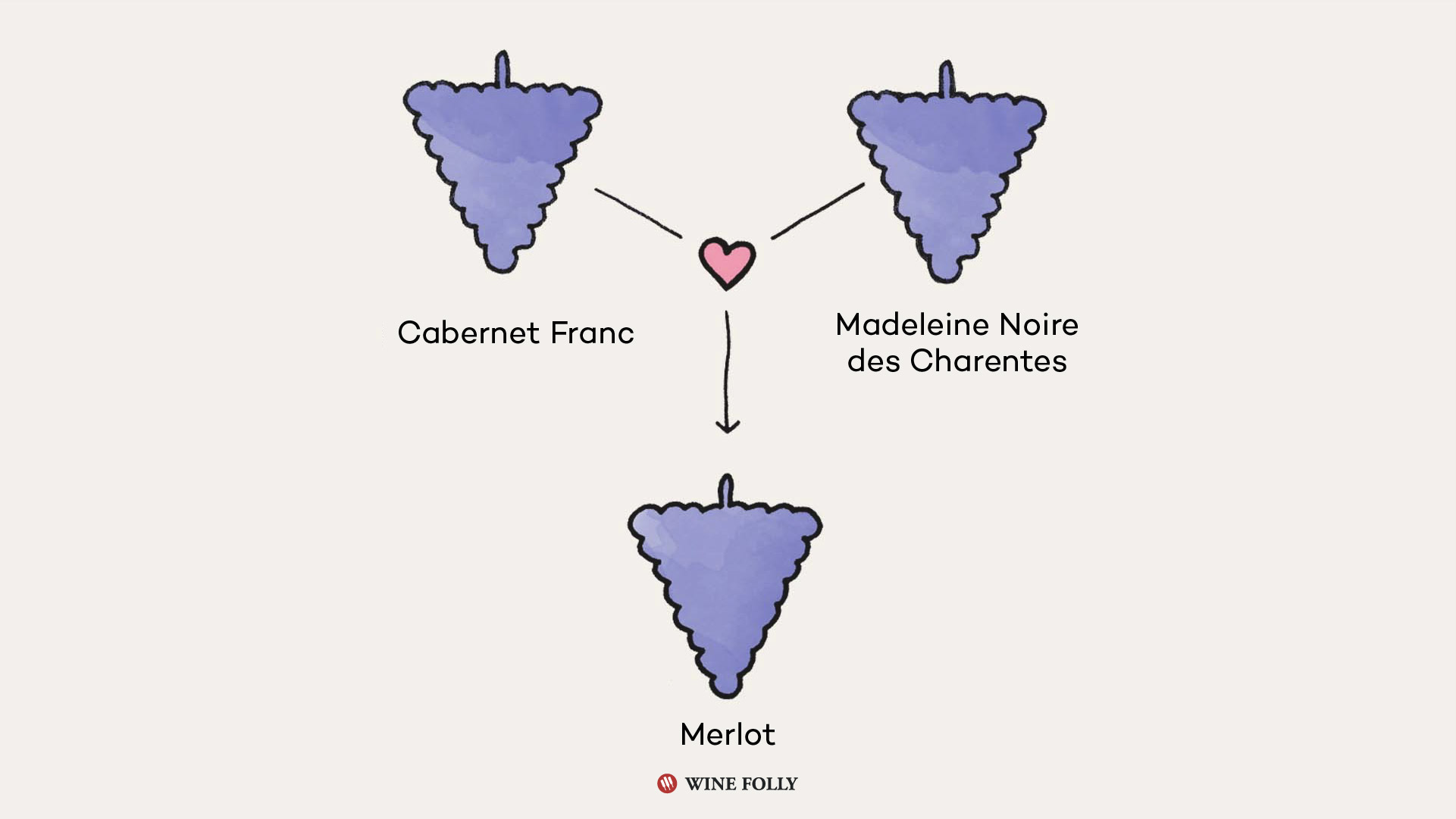
- Because Merlot and Cabernet Sauvignon share Cabernet Franc as a parent, they are half-siblings.

Where it Grows
Merlot grows in a range of climates and soils, with clay-rich soils particularly associated with its success on Bordeaux’s Right Bank. It offers a consistent profile of soft texture and ripe fruit flavors, but these can vary based on the region. Prominent regions include Bordeaux with rich, velvety wines; Tuscany with full-bodied blends; California with fruity, complex offerings; and Chile with more restrained, medium-bodied wines.
- France: 268,067 acres (108,483 hectares)
- Italy: 59,446 acres (24,057 hectares)
- USA: 52,512 acres (21,251 hectares)
- China: 41,267 acres (16,700 hectares)
- Spain: 31,758 acres (12,852 hectares)
- Chile: 29,793 acres (12,057 hectares)
Total Vineyard Area — 658,387 acres (266,440 hectares) (Source: University of Adelaide, 2021)

Bordeaux, France
What to expect: The vast majority of Merlot in France is planted in Bordeaux. In fact, Merlot accounts for about 60% of Bordeaux’s AOP vineyard plantings. On the Left Bank, it’s blended with Cabernet Sauvignon to smooth out the wines, but its heartland is on the Right Bank, where it’s commonly blended with Cabernet Franc.
So what does Merlot from Bordeaux taste like? You’ll find a unique mix of rich plum, distinct earthy notes, and herbal nuances. The best wines have smoke and clove notes from oak aging. Here are two great appellations to find age-worthy Merlot.
Pomerol: Close to the Dordogne River, Pomerol’s clay-rich soils provide the perfect canvas for Merlot. While you’ll find it blended with Cabernet Franc, you can also find some single varietal expressions. The wines express concentrated black cherry and plum flavors, subtle truffle notes, and a velvety texture. These wines become meaty and chocolatey with age and can improve for decades.
Saint-Émilion: Limestone and clay soils here contribute to structured, complex Merlot wines. Expect blackcurrant and dark cherry, with hints of chocolate and spice. Cabernet Franc can contribute freshness, structure and aromatic complexity to these blends.

Italy
What to expect: In Italy, especially Tuscany, Merlot is a darling partner to grapes like (surprise!) Cabernet Sauvignon (alongside Sangiovese) in a style of wine lovingly named “Super Tuscan.” Super Tuscans can be a bit like Bordeaux on steroids.
Merlot is widely planted in northeastern Italy, particularly in Friuli-Venezia Giulia, where it produces styles ranging from simple, fruity reds to fuller-bodied wines.

USA
What to expect: In the United States, Merlot is most well-known growing alongside Cabernet Sauvignon in California and Washington state. Compared to France and Italy, you’ll find riper, more fruit-forward styles in general. Styles vary by state and AVA, reflecting differences in climate, soils and winemaking.
Napa Valley: Thanks to the high levels of sunshine and heat, you can expect full-bodied, smooth, velvety styles of Merlot with buckets of fruit flavor. Versions from Napa Valley, while bold and rich, can also have a slightly minty note, keeping it fresh and exciting.
Columbia Valley: Merlot performs very well growing on the dry, eastern side of Washington state, where cool nights can help preserve acidity during ripening. Look to the Horse Heaven Hills, Yakima Valley and Walla Walla Valley for quality examples. You can expect ripe black fruit flavors, fresh acid, and an herbal edge.

Chile
What to expect: Chile is another important growing region for Merlot. Styles range from fruit-forward wines to more structured examples, depending on the region, site and producer.
A fun fact on the grape’s history in Chile is that in the 1800s, cuttings thought to be Merlot were brought over from Bordeaux and planted in Chilean vineyards. However, in 1994, a grape researcher named Jean Michel Boursiquot realized that they were, in fact, an entirely different variety – Carménère.
In-Depth Knowledge
Take a deep dive into understanding the complex nature of Merlot.
Why So Smooth?
Merlot’s signature velvety texture is due to its particular tannin structure. It has thinner skins and fewer seeds than Cabernet Sauvignon, its half-sibling. Thinner skins mean less tannin extraction during maceration, he process in which skins and other solids remain in contact with the juice. Fewer seeds matter because seeds contain harsher tannins, which, if over-extracted, can lead to a bitter taste.
Furthermore, the tannin molecules in Merlot tend to be smaller and have a different shape than those in Cabernet Sauvignon, resulting in a smoother, less astringent wine. This smoothness doesn’t mean a lack of complexity, though. Given enough sunlight, it develops rich fruit flavors and intriguing spice notes, creating a wine that is smooth but also layered and captivating.
The Underrated Understudy
Despite its impressive qualities, Merlot has often played second fiddle to Cabernet Sauvignon, both in blends and public opinion — a phenomenon that became particularly pronounced after the infamous ‘Sideways effect.’
When a character in the 2004 film ‘Sideways‘ expressed a distinct disdain for Merlot, this unduly influenced perceptions, and sales dipped while Pinot Noir, the film’s favored grape, soared.
This was despite Merlot being the backbone of some of the world’s most exquisite wines. Today, the ‘Sideways effect’ has largely faded, and Merlot has re-emerged from the shadows, reclaiming its status as a blending grape in addition to a varietal in its own right, capable of creating wines that are lush, complex, and wonderfully versatile.