

Red wine vs white wine comes down to more than grape color. Skin contact, fermentation, and aging all shape a wine’s color, tannins, texture, and aromas.
Learn how winemakers turn grapes into two very different styles of wine, and what those differences mean for your next glass.
Red Wine vs White Wine
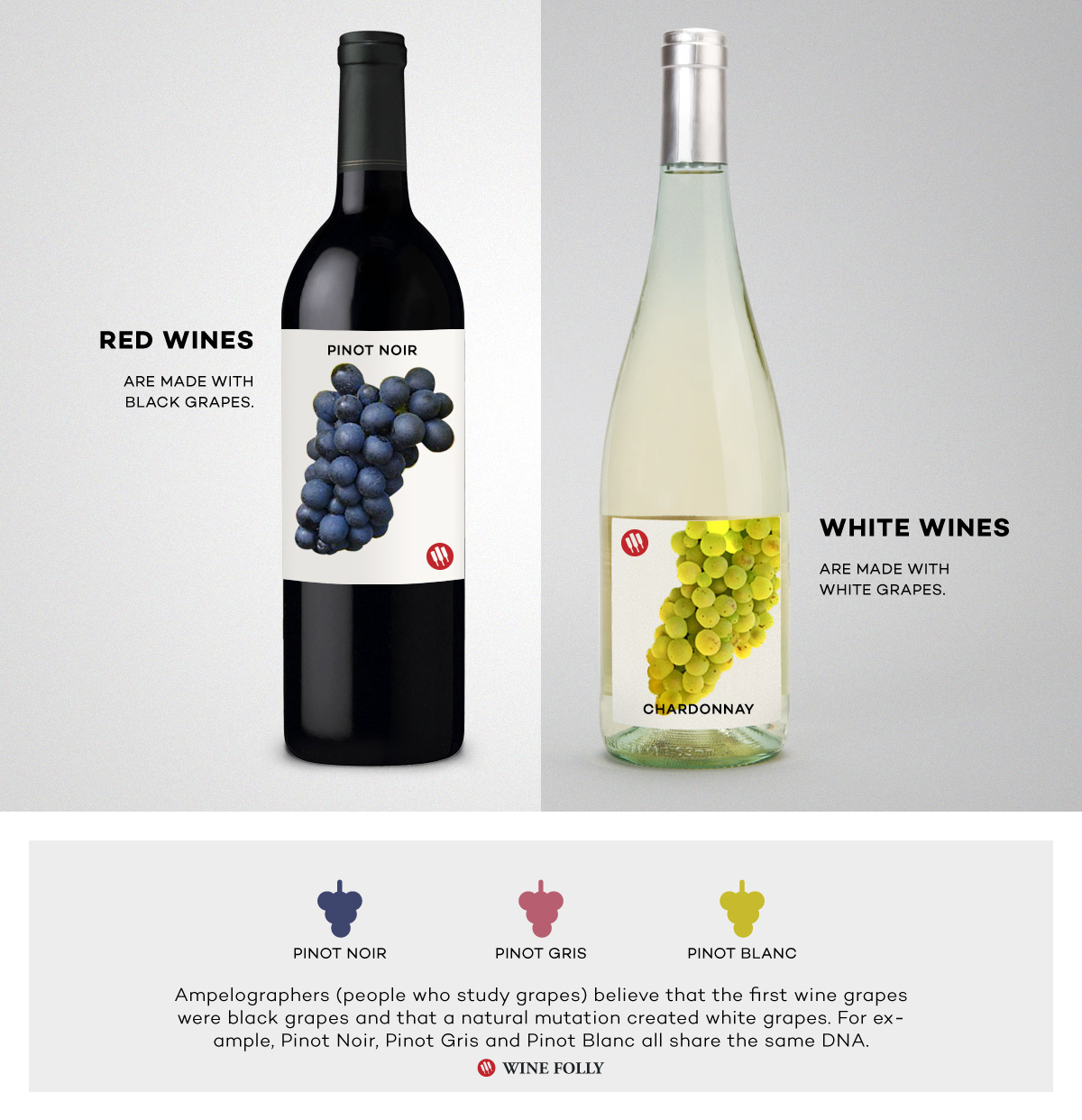
Made with Different Grapes
Red wines are typically made from dark-skinned grapes (Pinot Noir, Cabernet Sauvignon, etc.), while white wines are usually made from white grapes (Chardonnay, Pinot Grigio, etc.). There are a few exceptions, which we’ll get to shortly.
Most of the world’s wine comes from called Vitis vinifera, the European grapevine species behind varieties such as Chardonnay, Cabernet Sauvignon, and Pinot Noir.
Fun Grape-Family Fact: Pinot Noir (a black grape), Pinot Gris (a pinkish-gray grape), and Pinot Blanc (a white grape) are closely related color variants with shared DNA!. Natural mutations changed their berry colors without making them unrelated grape varieties.
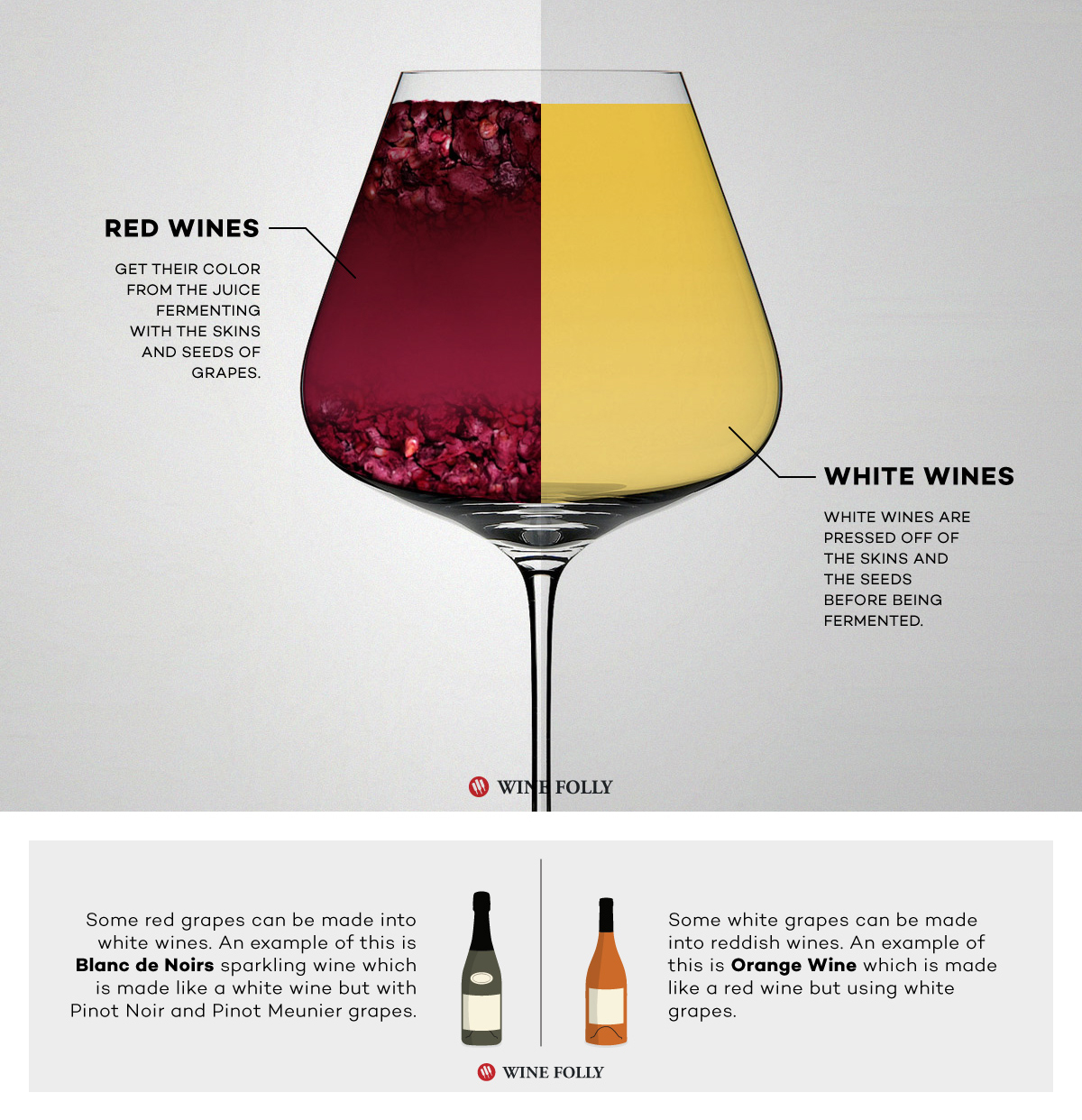
Made Using Different Parts of the Grape
Once grapes reach the winery, winemakers take different approaches to making red wine and making white wine. The biggest difference is skin contact. Red wines typically ferment with their skins, which provide color, tannins, and flavor. For most white wines, winemakers press the grapes first and ferment the juice without the skins. Grape seeds also contribute tannins, adding grip and a drying sensation known as astringency.
There are a couple of special cases where this isn’t true and the result is very different tasting wines. For example, Blanc de Noirs Champagne (“white from black grapes”) is made from dark-skinned grapes, typically Pinot Noir and/or Pinot Meunier. Gentle pressing and limited skin contact allow winemakers to produce a white wine from these grapes.
Another example is White Pinot Noir, made by pressing Pinot Noir grapes with minimal skin contact.
White grapes can also ferment with their skins, producing orange wines. Extended skin contact extracts color, tannins, and other compounds, giving these wines their amber hues and, often, a grippy texture.

Made Using Different Wine Making Methods
Red wines can range from light and tart to rich and velvety, while white wines can range from crisp and floral to full-bodied and creamy. Grape variety, climate, winemaking and ageing all influence the final style.
Winemakers can choose between vessels such as oak barrels and stainless steel tanks to shape a wine’s texture, aroma, and oxygen exposure.
Oak barrels allow small amounts of oxygen to interact with wine during ageing, which can influence its texture, tannins and aroma development. Stainless steel tanks are more neutral and help winemakers limit oxygen exposure and preserve fresh fruit characteristics.
Stainless steel tanks provide a neutral environment and help winemakers control temperature and limit oxygen exposure, often preserving fresh fruit and floral aromas.

Each Type Has Different Chemical Compounds
So, the big question remains:
“Which type of wine is better for you?”
Well, since all the health benefits associated with wine are found in the skins and seeds of the wine grape, then red wines are the style of wine that some consider “better” for you. That said, not all red wines are equal!