

Wine pairings with barbecue get much more interesting once you move beyond “red wine with meat.” Smoke, spice, fat, acidity, and sweetness all shape the pairing, and the grill brings them all together.
Barbecue Meat Wine Pairings
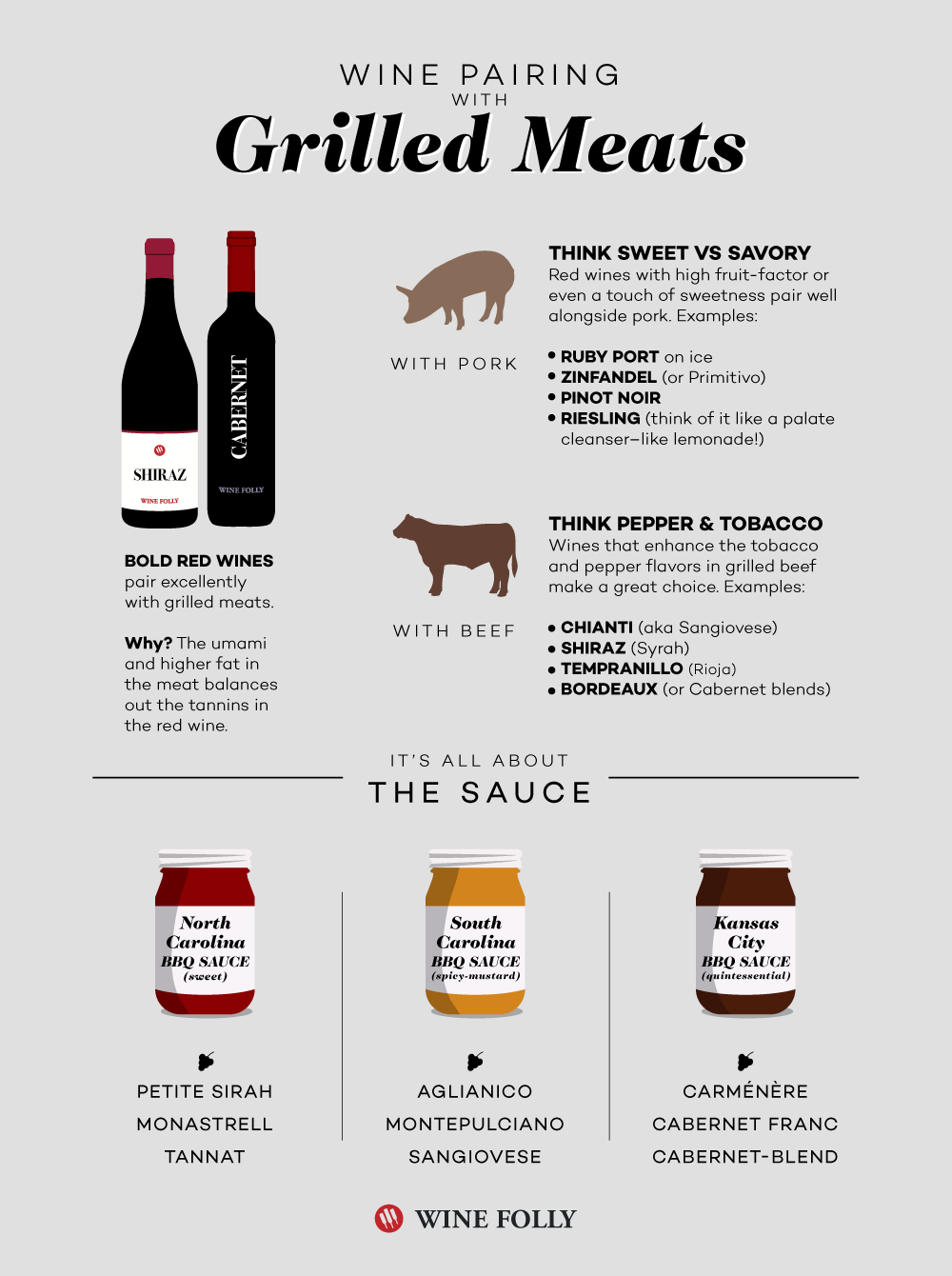
- North Carolina Barbecue Sauce (vinegar-forward and tangy): Petite Sirah, Monastrell, Tannat, Pinotage
- South Carolina Barbecue Sauce (spicy mustard): Aglianico, Sangiovese, Montepulciano
- Kansas City Barbecue Sauce (classic): Carménère, Cabernet Franc, Cabernet Sauvignon or a Cabernet blend
- Plain Barbecue Pork: Zinfandel (or Primitivo), Ruby Port served over ice, Dry Riesling, Garnacha
- Plain Texas-Style Beef Brisket: Tempranillo, Australian Shiraz, GSM Blend
- Burgers and Beef: Sangiovese (or Chianti), Syrah, American Oak-Aged Merlot, Cabernet Franc, Priorat-blends, etc.
Typically, when we grill, we grill meat (anything other than poultry or fish). The smoke, char, and fat in grilled meats naturally complement red wines with structure, ripe fruit, and moderate tannin. Why? Protein and fat soften tannin, making bold reds taste smoother and more balanced alongside grilled meat.
Pork barbecue often combines smoke, sweetness, spice, acidity, and caramelization — all of which influence the wine pairing. In this case, you can use your wine to balance the smoke and spice of your grilled pork with something fruity that has similar smoky-spicy flavors. For example, a fruit-forward Zinfandel works especially well because its jammy blackberry fruit and peppery spice mirror the sweet-smoky intensity of barbecue sauce. However, you also have another option. In some pairings, the wine acts almost like an additional sauce component.
For example, you could serve a glass of Ruby Port on ice alongside your slow-smoked pork, which will easily serve as the sweet “sauce,” and provide you with an exceptional explosion of flavor – don’t forget the slightly pickled sweet slaw on the side. A nice, dry Riesling (Trocken) might also work beautifully here.
For beef, structure matters more than sweetness; think about a structured red wine, such as Tempranillo, Cabernet blend, Sangiovese, or even a good GSM Blend (Grenache-Syrah-Mourvèdre). These wines amplify smoky char, black pepper, savory herbs, and caramelized flavors from the grill.
Chicken and Fish
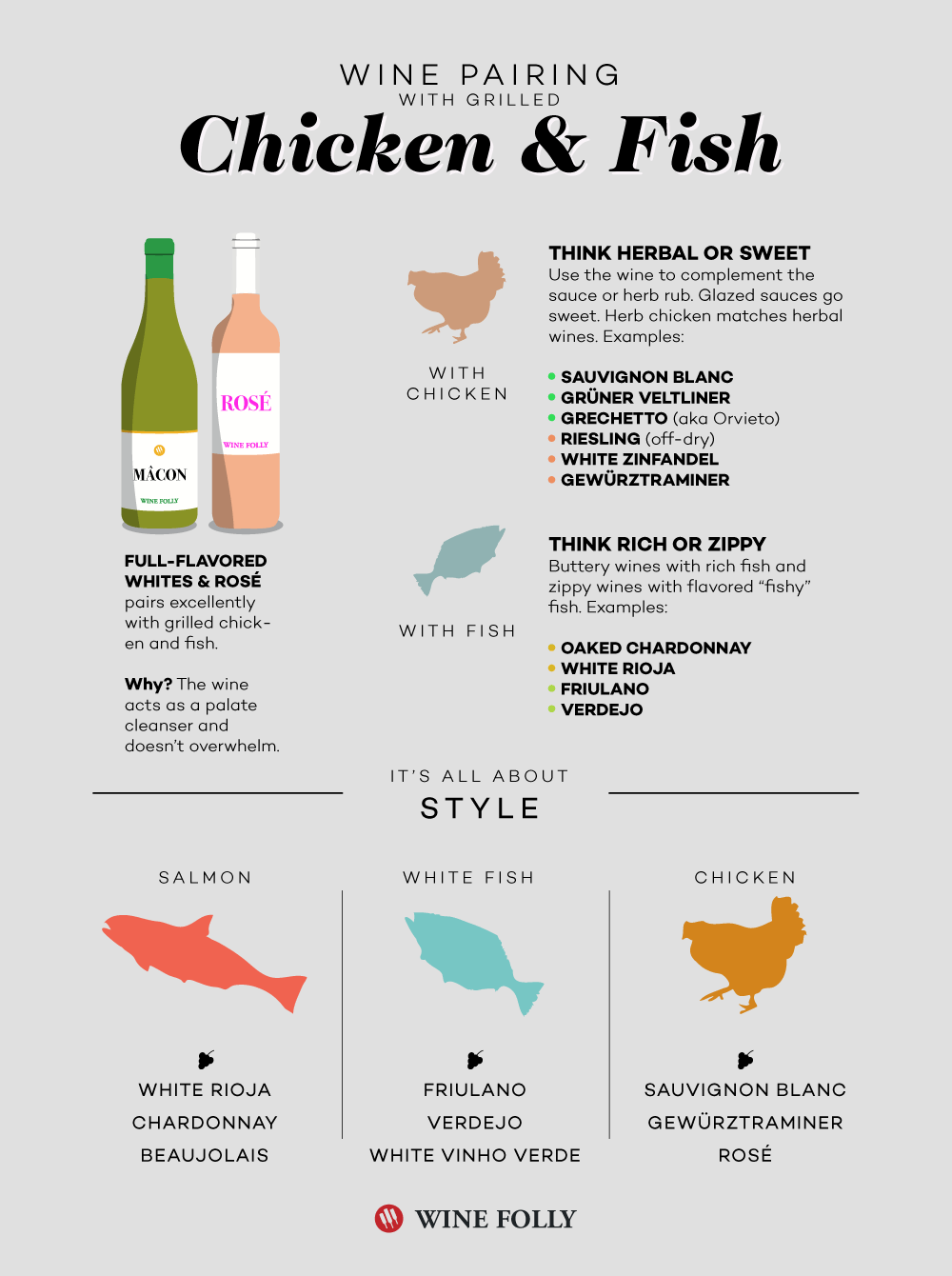
- Grilled Chicken: Sauvignon Blanc, Grüner Veltliner, Grechetto
- BBQ Chicken: Rosé, White Zinfandel, Gewürztraminer, Off-Dry Riesling
- Grilled White Fish: Friulano, Verdejo, White Vinho Verde, Colombard
- Grilled Salmon: Chardonnay, White Rioja, Viognier, Marsanne blends and even lighter-bodied Beaujolais or Pinot Noir.
Lighter proteins shift the focus from tannin toward acidity, citrus, freshness, and texture. Simple grilled chicken and fish pair beautifully with Sauvignon Blanc or Verdejo. These wines typically bring citrus, green herbs, minerality, and bright acidity that complement lighter grilled dishes. Simple grilled preparations often work best with wines that emphasize freshness over oak or heaviness. And if the recipe is simple enough, chicken (and fish) almost always pair well with a good unoaked to lightly oaked Chardonnay.
Once sweet barbecue sauce and char enter the equation, though, with the sticky sauce, grill marks, and all, a slightly off-dry Gewürztraminer is an excellent choice. Try that with blue cheese on your grilled wings – yum! The sweetness will cut the spice and the pungency of the blue cheese, creating the most glorious amalgamation of aroma and flavor on your palate. Make sure to serve that Gewürztraminer cold to further quench the heat from spicy foods.
Taking things in a lighter direction on the grill, basic salt and pepper, maybe a few tomatoes, or even lime and cilantro for fish tacos, lean into wines with citrus-driven acidity and mineral freshness in a nicely chilled Sauvignon Blanc, Fumé Blanc (slightly oaked Sauvignon Blanc), Grechetto, Grüner Veltliner, or Verdejo.
Grilling brings out smoke, salt, char, spice, and sweetness — and every one of those elements changes how a wine tastes beside the food. That’s why great barbecue pairings aren’t about memorizing exact grapes or rigid rules. They’re about balance.
Once you start pairing based on texture, intensity, and flavor structure instead of color alone, the grill becomes one of the most versatile places to enjoy wine.