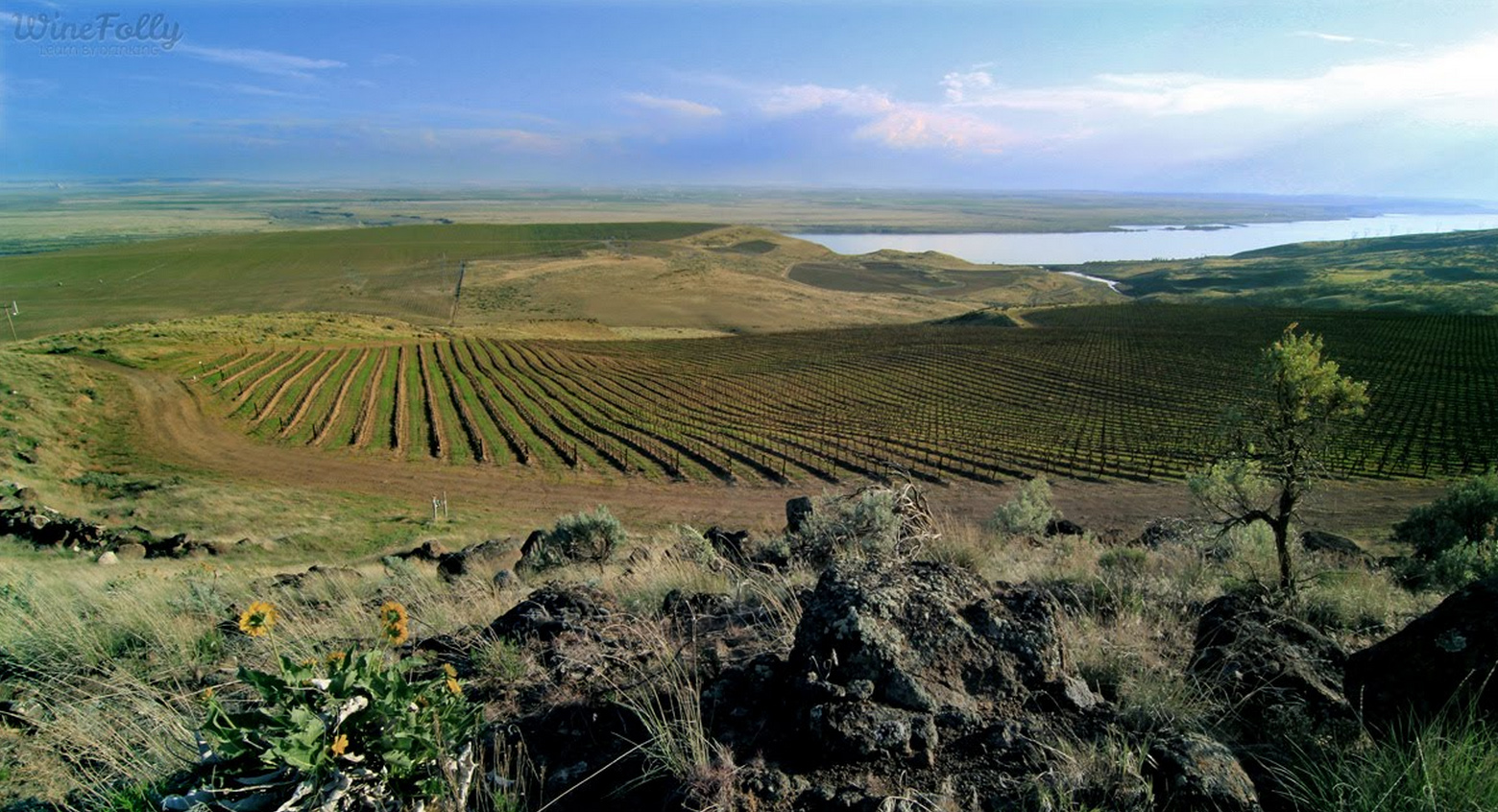
In Washington, the grapes go the extra mile—literally. Some vineyards sit over 100 miles (160 km) from the wineries that turn their fruit into wine, making the state’s wine scene one of the most spread‑out (and fascinating) in the world.
With more than 1,000 wineries, over 50,000 planted acres and a growing list of AVAs (with the most recent, Beverly, Washington AVA, being added in 2024), Washington has become the second-largest wine-producing state in the U.S., contributing over $10 billion annually to the local economy.
Find out more about this unique region and what makes it special.
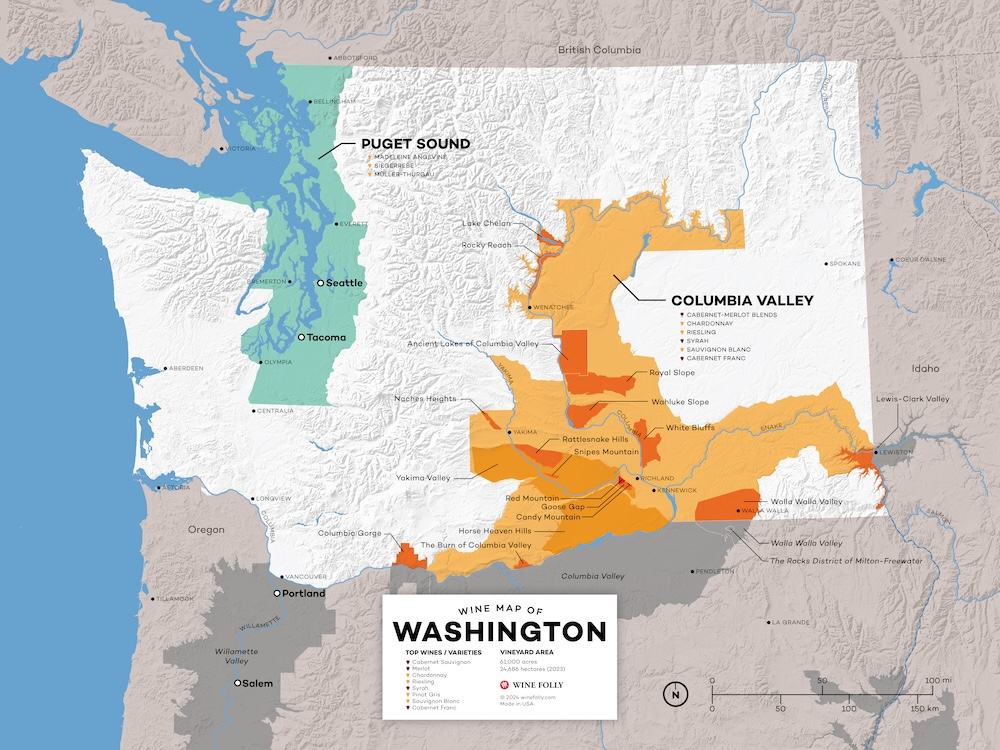
What Is Washington Wine Country Like?
Most of Washington’s vineyards are located east of the Cascade Mountains. The climate on the eastern side is very different from what you might imagine; it’s dry and sunny!
While the arid eastern slopes and rain-shadowed Columbia Valley provide ideal conditions, growers now also face increasing heat stress, water rights constraints, and the need to adapt to climate change — making site selection and soil type ever more critical.
Huge glacial rivers, including the Columbia River, flow through Washington, making it possible to support a large farming industry. Before wine was planted in Walla Walla, WA, the city was famous for sweet onions and apricots the size of your hand.

What is Washington Wine Famous For?
While Bordeaux‑style red blends (Cabernet, Merlot, Syrah, Malbec) remain a hallmark, Washington’s whites (especially dry Rieslings) continue to attract attention—and boutique bottlings of Syrah, Cabernet Franc, and Sauvignon Blanc are now firmly on the map.
Where to Taste Washington Wine
Seattle
An urban winery scene in industrial parks south of downtown.
Woodinville
A suburban wine tourist area with industrial wineries, tasting rooms, hotels, and restaurants.
Yakima Valley
A vineyard zone with tasting rooms dotted along the highway.
Walla Walla
A wine-friendly city and vineyard zone with tasting rooms, hotels, and restaurants.
A Few Big Vineyards and A Lot of Small Wineries
Big Vineyards The vineyards in Washington are huge! In Washington, you can drive nearly 3 miles (5 km) to span just one side of a 2,000-acre vineyard. Because of the sheer size of these vineyards, the people who manage these vineyards only focus on viticulture.
Small Wineries Winemakers make contracts with big vineyards to buy grapes. Some vineyards hold contracts with up to 30 different wineries. If you find a wine that you like, take note of the vineyard from which it comes. Oftentimes, you’ll find several wineries producing wine from the same vineyard.
Why Washington Wine Works
The system of large vineyards and small wineries works for winemakers because they are located close to their largest buying market around Seattle. By selling directly to customers, wineries can earn more money per bottle than if they sold to distributors. It also costs less to maintain a cellar in the Puget Sound’s temperate zone.
But is this good for consumers? Yes, if you’re in Washington; otherwise, no. Historically, distribution beyond Washington has been limited; however, recent years have seen improved access through direct-to-consumer shipments, club sales, and expanded national retailer listings — although many boutique producers remain regional in scope.
Change is in motion! Washington’s wine industry is no longer simply expanding; it’s recalibrating. After a decade of broad acreage growth and major contract sourcing, one of the largest players, Ste. Michelle Wine Estates is cutting more than 40 % of its grape contracts over five years (beginning in 2023) and is scaling back vineyard acres in the state.
Meanwhile, Washington’s wine industry continues to contribute a sizeable amount to the local economy, even as the cost structure remains more favourable than in California, thanks to lower land and labour costs in many eastern Washington regions. The takeaway: growth won’t solely be about planting more vines or expanding footprints. It’s now about quality, right‑sizing, strategic consolidation, and wider distribution beyond the state’s borders.