

Vinhos Verdes is a demarcated region in Portugal’s cool-climate Atlantic north, known for naturally low-alcohol white wines made from a diverse range of indigenous grapes. Long before lighter alcohol became a global wine trend, this region built its identity around vibrant, food-friendly wines with freshness, texture, and distinct regional character.
Today, global drinking trends are increasingly aligning with what the region has always done naturally: lower alcohol, bright acidity, and wines driven by native grape varieties rather than heavy oak or high ripeness.
Let’s take a closer look at Portugal’s indigenous varieties that go into making naturally lower alcohol, terroir-driven Vinhos Verdes wines.
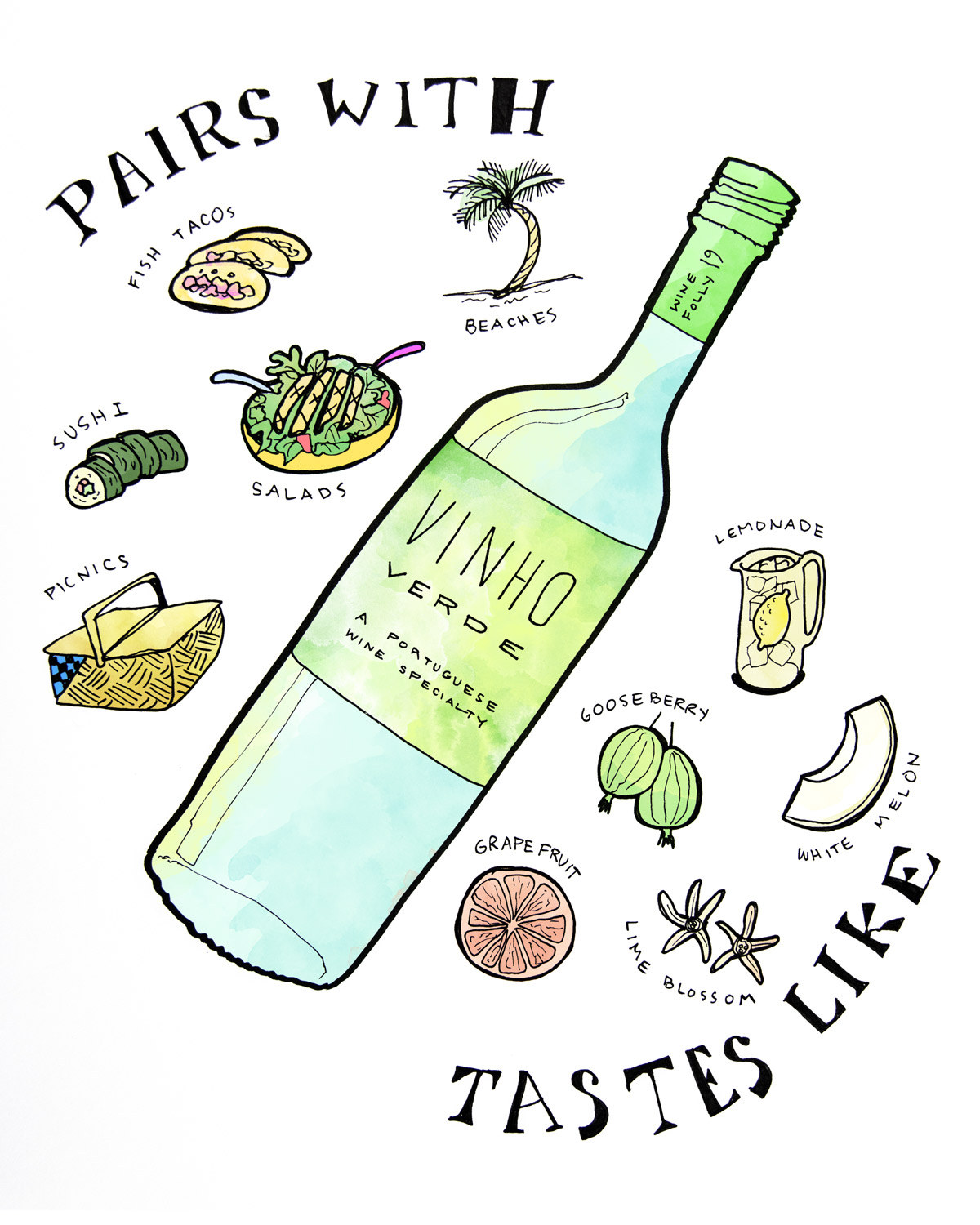
White Vinhos Verdes
Tasting Notes: Lemon, White Melon, Gooseberry, Grapefruit, and Lime Blossom
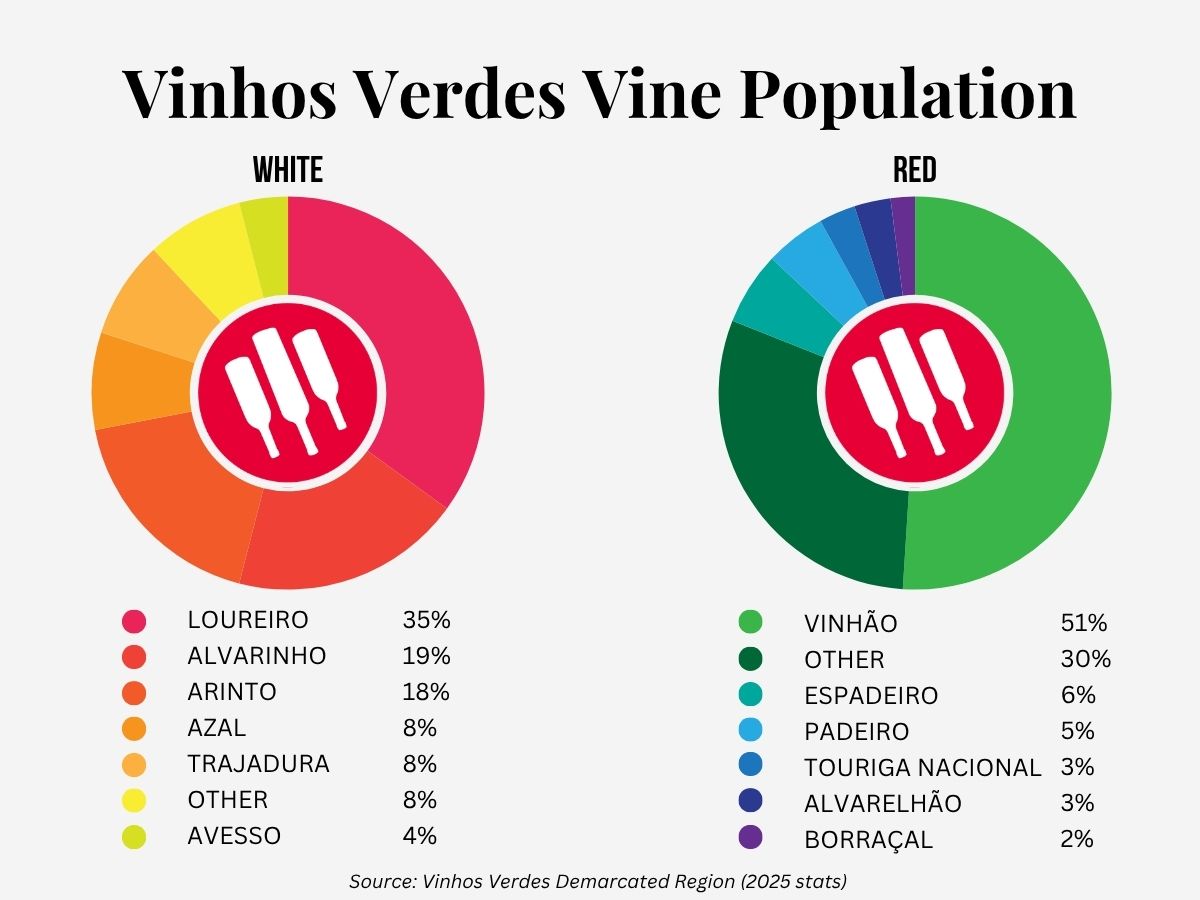
The vast majority of the region’s wines are white. Six indigenous grapes form the backbone of the region’s white wines: Alvarinho, Arinto, Azal, Avesso, Loureiro, and Trajadura. Unlike internationally dominant varieties such as Chardonnay or Sauvignon Blanc, these grapes remain relatively unexplored outside Portugal — one of the reasons Vinhos Verdes continues to feel fresh and discovery-driven even for experienced wine drinkers.
While styles vary across the region, most white Vinhos Verdes wines moderate alcohol, vibrant structure, and a strong sense of freshness shaped by the Atlantic climate. Increasingly, producers are focusing on single varieties such as Alvarinho and Loureiro to showcase the individuality of the region’s native grapes.
- Azal: High-acid and slow-ripening, often used to lift freshness in blends. Expect sharp citrus and green apple.
- Arinto: Also called ‘Pederna,’ it is considered one of Portugal’s top white grapes. Expect juicy melon and citrus with some bitter notes on the finish. Great examples can age 7+ years!
- Alvarinho: One of Portugal’s most celebrated white grapes, Alvarinho produces aromatic wines with citrus, grapefruit, and floral notes layered over a textured, mineral-driven palate. Known as Albariño just across the border in Spain, this variety is increasingly bottled on its own in Vinhos Verdes, where it produces some of the region’s most structured and age-worthy wines.
- Avesso: Similar to Alvarinho in its flavors of grapefruit and peach, but with a subtle green almond bitter note, there is added complexity.
- Loureiro: If there were such a thing as “The Riesling of Portugal,” this would be it.
- Trajadura: This grape is a popular blender with Alvarinho. It adds richness and aromas of pear and citrus blossom.
How to Read Vinhos Verdes Quality Levels
Vinhos Verdes now spans a much wider quality spectrum than many drinkers realize — from light everyday blends to site-specific whites built for aging.
- Entry-Level Blends Light, zippy, and often lightly spritzy. Typically, a mix of regional grapes (Loureiro, Trajadura, Arinto). Made for early drinking and casual occasions.
- Single-Varietal Wines More producers are bottling grapes like Alvarinho and Loureiro on their own. These wines show more definition, texture, and regional character.
- Sub-Regional Bottlings Look for names like Monção e Melgaço. These wines tend to be more structured, mineral-driven, and less reliant on carbonation.
- Estate & Single-Vineyard Wines The top tier. Often lower yields, older vines, and minimal intervention in the cellar. Expect more concentration, aging potential, and a clear sense of place.
How to Choose a Great Bottle
Vinhos Verdes wine labels don’t always spell things out, so here’s what actually matters:
Alcohol level is one of the easiest ways to understand style in Vinhos Verdes wines:
- 8.5–10.5% ABV → lighter-bodied, citrus-driven, traditionally styled wines
- 11.5–13% ABV → richer texture, riper fruit, and more structured expressions
Unlike many modern low-alcohol wines, these styles are not the result of dealcoholization or trend-driven winemaking — lower alcohol has long been part of the region’s identity.
- Look for “Alvarinho” on the Label
This is your shortcut to more serious, structured wines. - Skip the Cheapest Option (Usually) Rock-bottom pricing often means simple blends with added carbonation and less depth.
- Watch for Sub-Regions Bottles labeled Monção e Melgaço or inland areas tend to show more ripeness and complexity.
- Fizz = Style Choice, Not Quality Marker A slight spritz can be refreshing, but top producers often dial it back to highlight texture and minerality.
A Note on the Spritz
Some Vinhos Verdes wines have a subtle spritz from retained dissolved CO₂ or gentle carbonation, though many modern producers minimize this to emphasize texture and vineyard character. Today, the region is increasingly defined less by fizz and more by its indigenous grapes, moderate alcohol, and Atlantic-influenced style.
Red and Rosé Vinhos Verdes
Tasting Notes: Sour Plum, Sour Cherry, Pepper, and Peony
Red and rosé Vinho Verde wines are rare outside Portugal due to limited production and challenging ripening conditions. Cool, wet Atlantic conditions make it difficult for red varieties to fully ripen. As a result, these wines remain a niche part of production, though interest in native red varieties is slowly growing alongside the region’s broader quality shift.
The grape Vinhão (more commonly known as Sousão) is deeply colored, high in acidity and tannins, with dark fruit and peppery notes.
Padeiro (“pah-deh-rhee-yo”) is a rare native grape that has seen renewed interest in recent years. Naturally pale in color, often resembling rosé, it produces light-bodied wines with bright red fruit, high acidity, and a fresh, easy-drinking style.
What is the Minho?
Most people picture the Algarve area when imagining Portugal. Along the Atlantic, Algarve is hot and dry with sandy beaches and idyllic blue waters.
Up north, it’s a very different story.
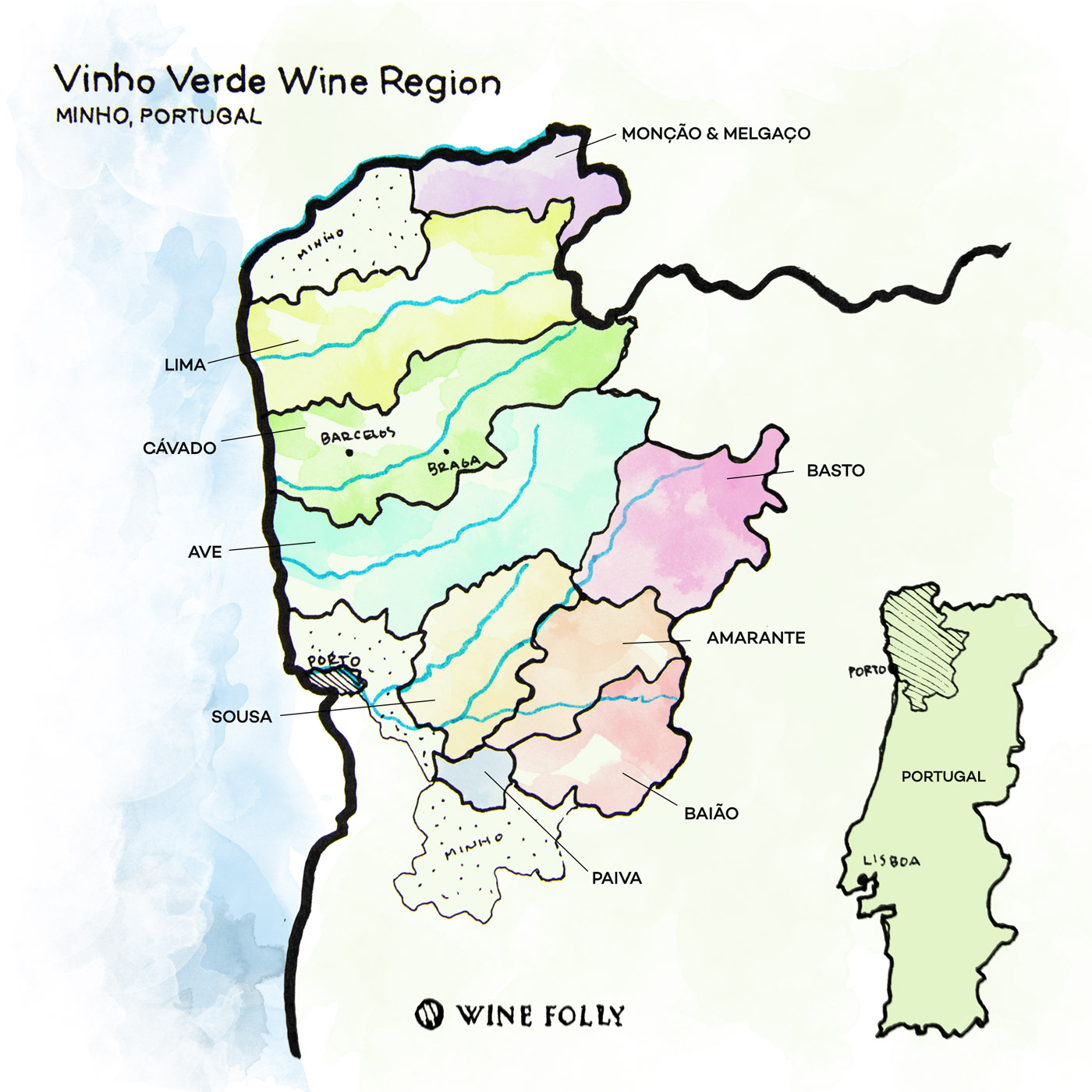
Minho faces the Atlantic to the west, fully exposed to coastal weather systems. This strong influence plays a key role in the region’s growing focus on sub-regions and site-specific wines, as producers highlight differences in exposure, elevation, and soil. The region divides broadly into three climate zones based on Atlantic influence:
- Monção and Melgaço: Slightly inland and along the border of Spain, this sub-region produces excellent Alvarinho with more elegant, mineral notes due to the well-draining granitic soils.
- Lima, Cávado, and Ave: The sub-regions closest to the coast are very rainy. These areas are especially known for aromatic white wines based on Loureiro, Arinto, and Trajadura.
- Sousa, Paiva, Baião, Amarante, and Basto: These inland sub-regions are more mountainous and sheltered from direct Atlantic influence, gradually transitioning toward the Douro Valley. Warmer temperatures and increased sunshine allow later-ripening grapes like Azal and Avesso to reach maturity while maintaining the region’s signature acidity. The area is also home to several native red varieties, including Espadeiro, Vinhão (Sousão), and the rare Padeiro.
These distinctions are becoming increasingly important as more wines are labeled by sub-region rather than blended across the broader Vinhos Verdes demarcated area.
Traveling the Land of Vinhos Verdes
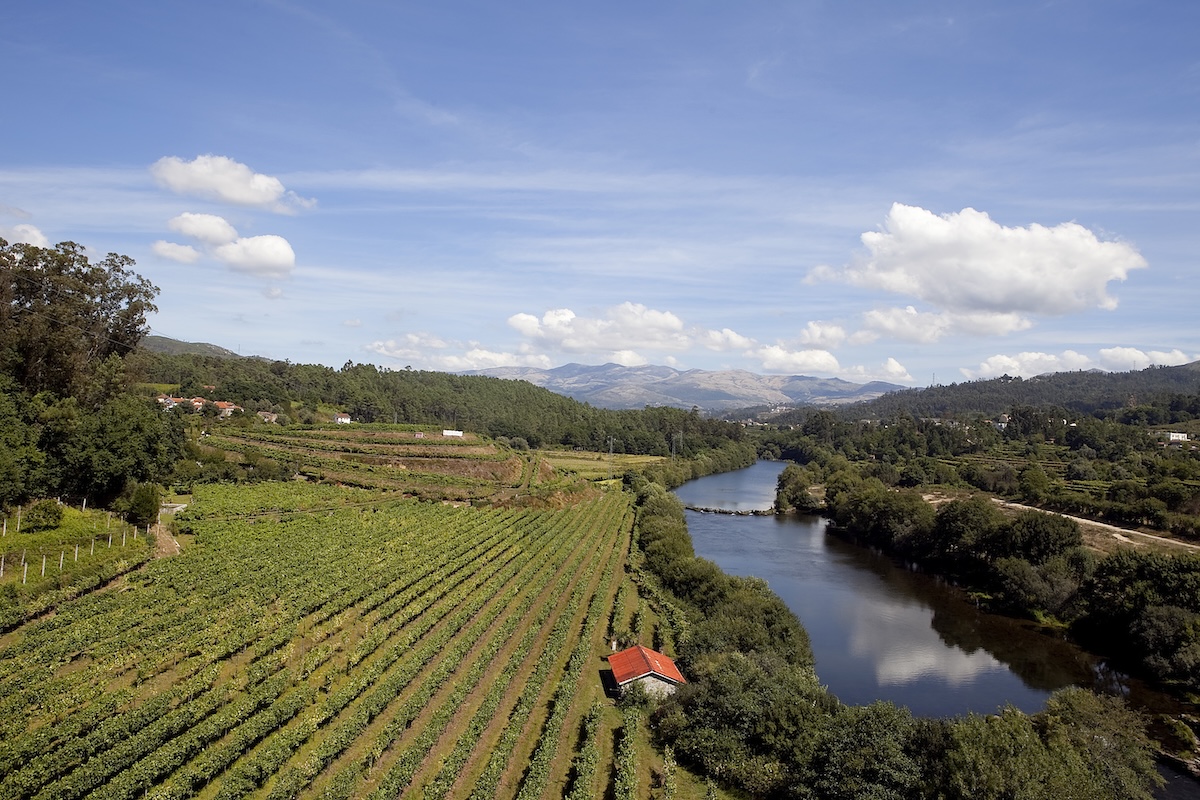
Early summer offers peak vineyard activity and access to small producers rarely exported. The city of Barcelos is known for its historic estates and strong local wine culture.
When you go inland, it’s much hillier and more rugged (and harder to navigate without a native speaker!). Still, for those with a rental car (and good hand-signals), the winemakers are extremely welcoming and generous.
As global wine trends shift toward freshness, moderate alcohol, and authenticity, Vinhos Verdes stands out as a region that has championed these qualities all along — through its climate, native grapes, and deeply regional identity.